




Every procedure at Hair Transplant Newcastle is performed by a GMC-registered doctor from first extraction to last graft
Our clinic sits at the heart of Newcastle, a short walk from Central Station and accessible from across the North East
A straight-talking assessment of your hair loss and what is realistically achievable, no hard sell
Your surgeon is committed to your procedure for the entire day, no switching between patients mid-session
A transgender hair transplant is a procedure focused primarily on feminisation of the hairline. For trans women and non-binary patients who have experienced male pattern hair loss, or who have a naturally high or masculine hairline, transplantation can be one of the most meaningful steps in the gender-affirming process.
At Hair Transplant Newcastle, we approach these procedures with the same clinical rigour as any other transplant, and without assumptions about what the patient wants. Every consultation starts with an open conversation about goals, timeline, and what is genuinely achievable.
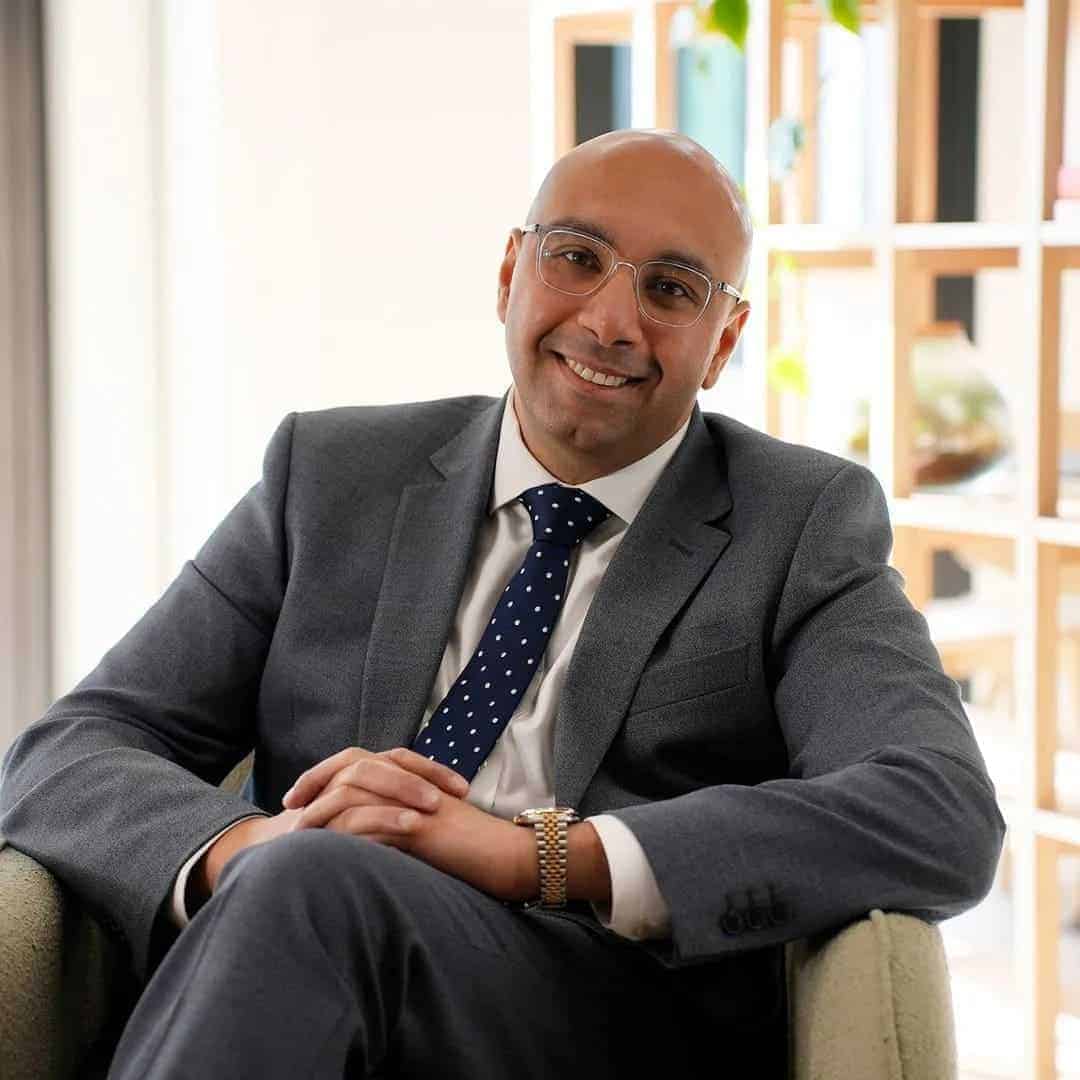
Dr Aziz Elgindi (GMC: 7450896) and Dr Mohammed Ditta (GMC: 7084372) have experience working with patients across the spectrum of gender identity and expression. For trans men, a beard transplant is often the primary surgical goal, and that is equally supported at our Newcastle clinic.
What the Procedure Addresses
A feminising hairline transplant typically involves one or more of the following:
- Hairline lowering: Creating a lower frontal hairline that sits higher up the forehead than a typical male hairline
- Temple softening: Rounding off the angular temple recession that male pattern hairlines develop, creating the softer, rounder temple corners associated with a feminine hairline
- Density restoration: Rebuilding areas where male pattern hair loss has caused thinning or recession along the hairline
These goals can be addressed individually or in combination. The most common request is a combination of temple softening and frontal hairline lowering, which together significantly change the overall frame of the face.
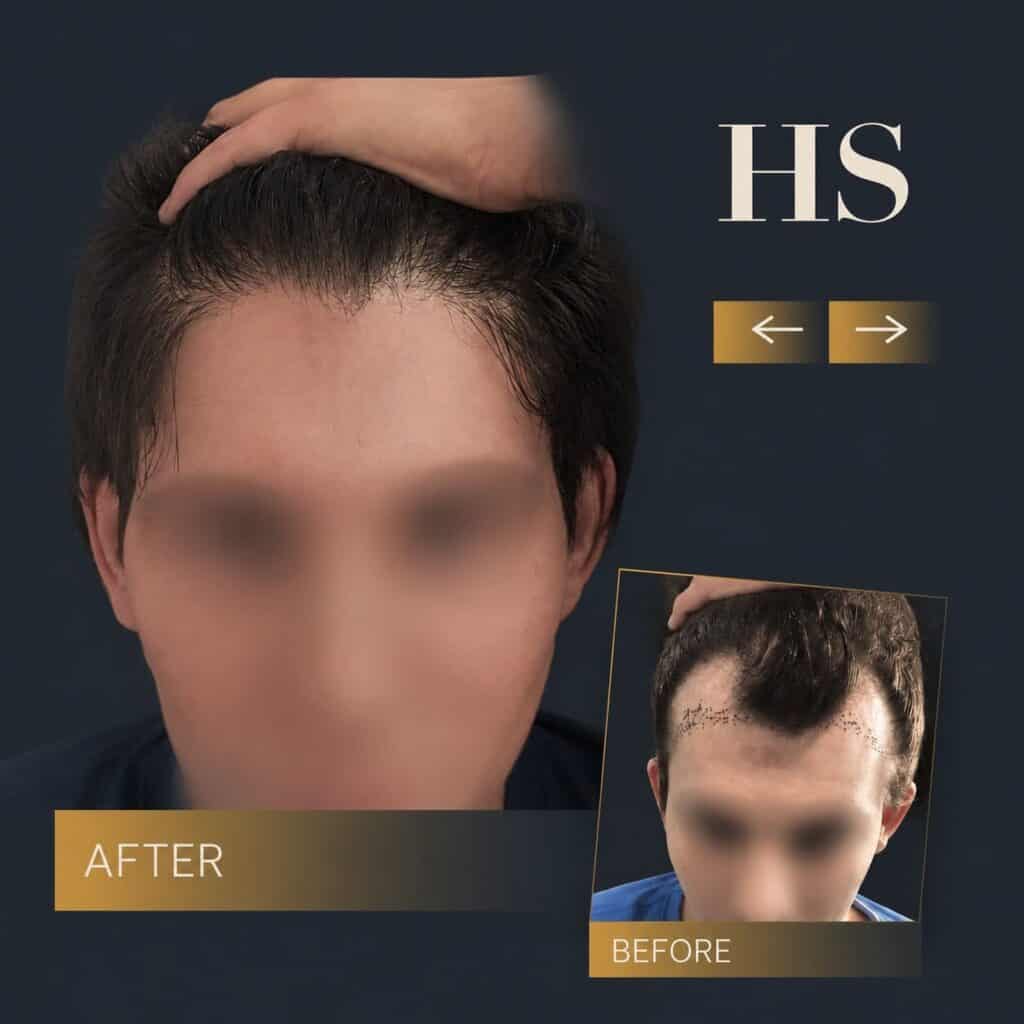
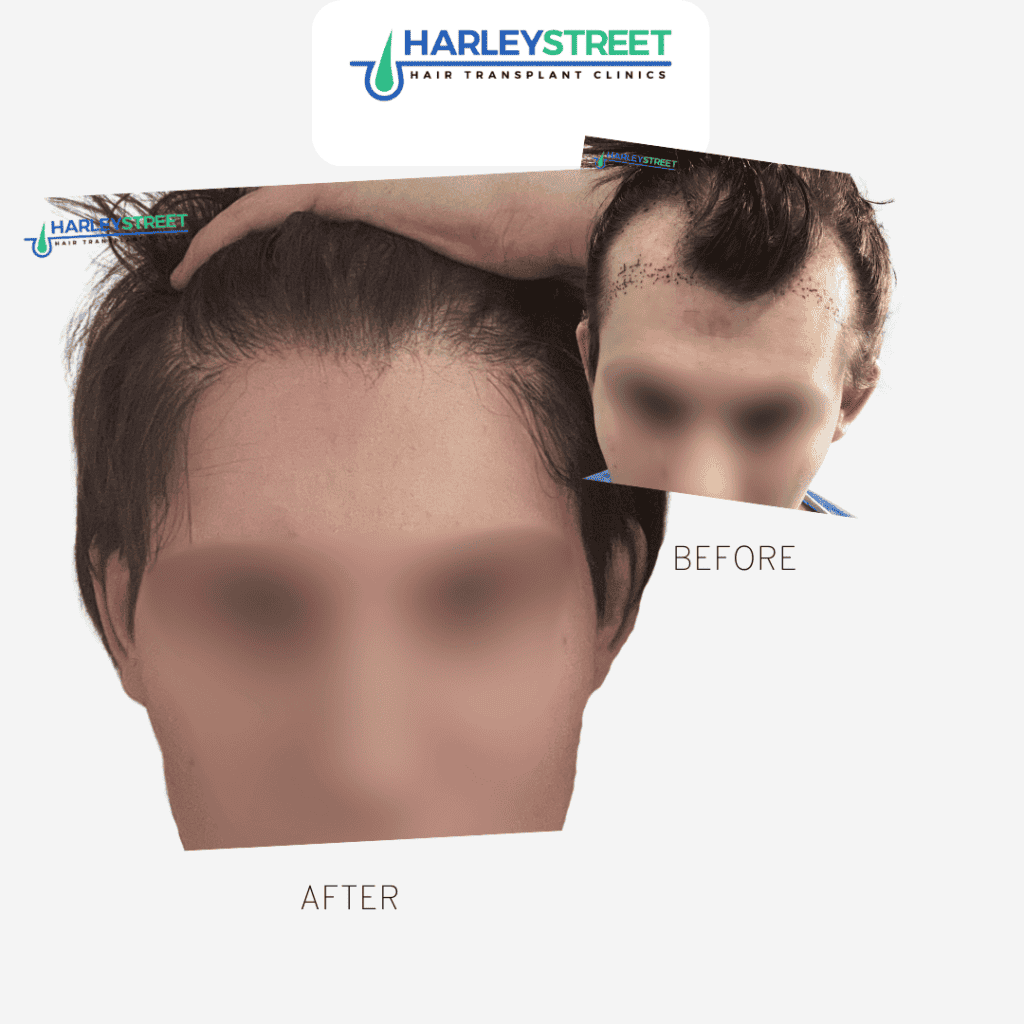
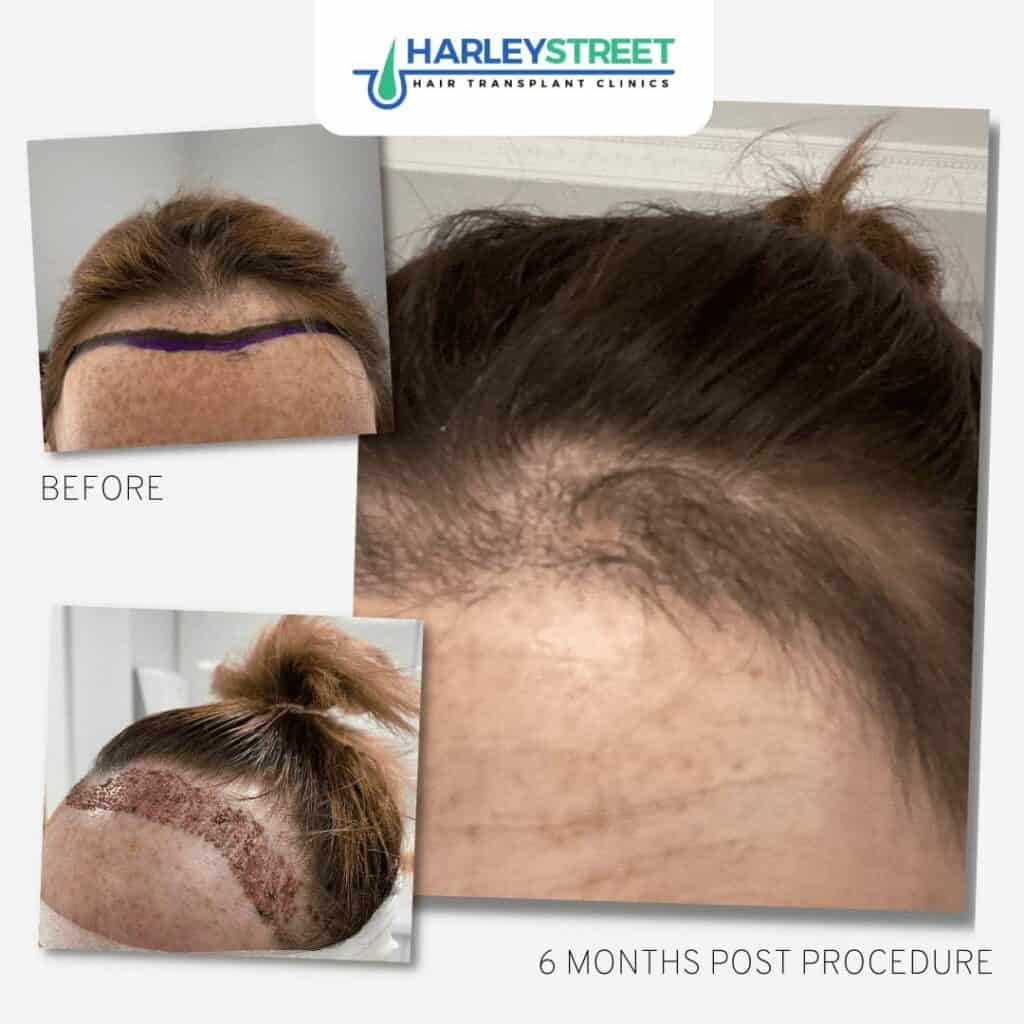
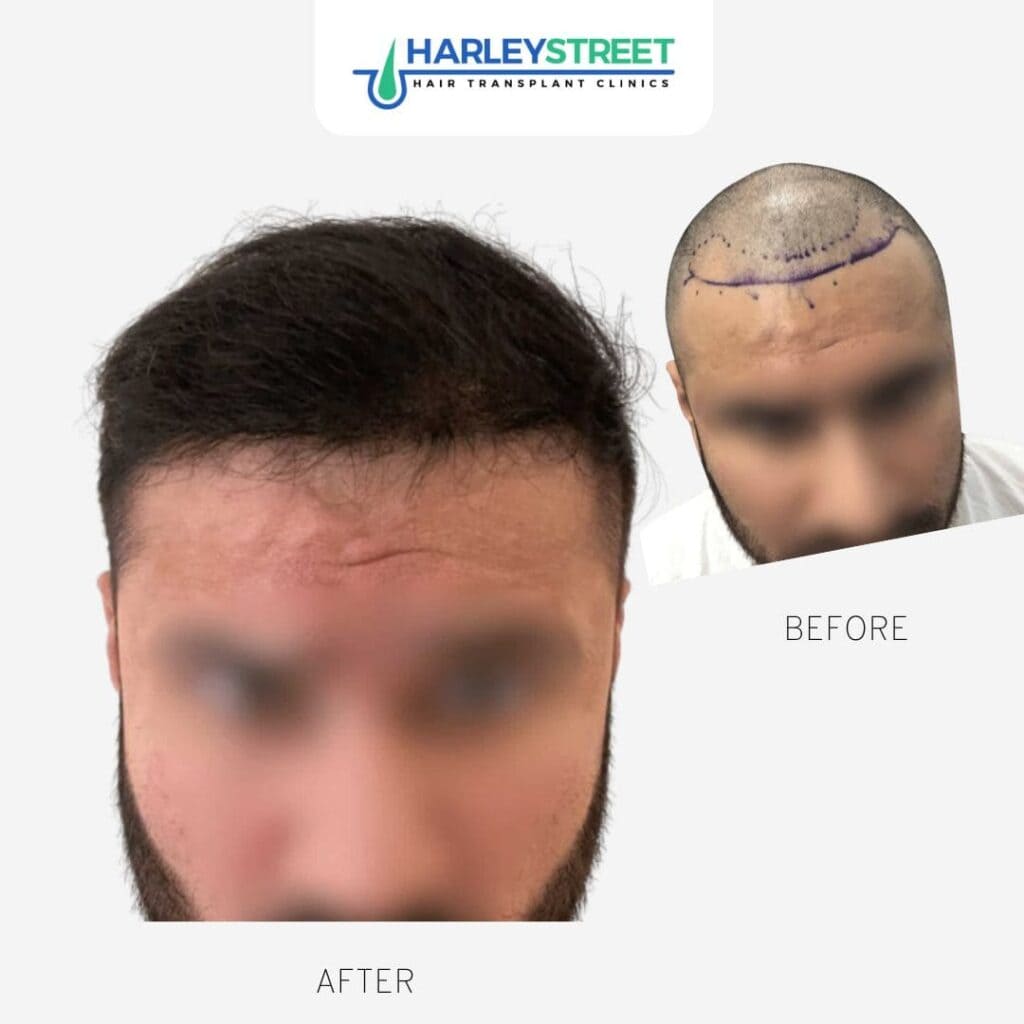
Before and After Transgender Hair Transplant Results in Newcastle
A selection of results from patients treated at our Newcastle clinic. All procedures were performed by our GMC-registered surgeons.
How Feminising Hairline Surgery Differs
The most important difference between a feminising hairline and a standard male hairline restoration is the shape.
Male hairlines typically sit higher on the forehead and have a more defined M-shape, with angular temples. Feminine hairlines sit lower, have rounded temple corners, and often have a slight oval curve rather than a flat line across the front.
Creating a feminine hairline on a patient who has experienced male pattern recession requires:
- Designing a hairline shape that is appropriate for the patient’s facial structure
- Filling in the temporal corners to soften the angular recession
- Using single-hair grafts at the very front of the hairline to create a soft, natural edge rather than a harsh line
- Accounting for ongoing hairline maintenance requirements, particularly for patients earlier in their hormone therapy journey
Hormone Therapy and Hair Transplant Timing
For trans women on oestrogen-based hormone therapy, HRT often reduces ongoing hair loss significantly. Many patients find that further frontal recession stabilises or even partially reverses on HRT.
Where possible, it is worth allowing HRT sufficient time to demonstrate its effect on hair loss before planning a transplant. This prevents a situation where transplantation is done before the extent of hormone-related recovery is known. However, this is not a strict requirement. Some patients have experienced significant loss before starting HRT, or have loss patterns that are not responsive to hormones, and proceeding with a transplant earlier makes clinical sense.
Your surgeon will discuss this in detail at consultation without pressure or assumptions.
Graft Count and Technique
Graft counts for feminising hairline procedures typically range from 1,500 to 3,500 depending on the extent of the work required. Temple softening alone may require 600 to 1,200 grafts per temple. Full hairline lowering with temple rounding sits at the higher end.
FUE is the standard technique, with DHI preferred for precision work along the hairline and temple zones where new follicles need to sit between existing hairs. For patients who cannot or do not wish to shave the donor area, FUT provides an alternative that avoids donor area shaving.
Where to Find Us
Hair Transplant Newcastle
Merchant House
30 Cloth Market
Newcastle
NE1 1EE
Easy to reach from across the North East:
- Metro: Monument station, 3-minute walk
- Train: Newcastle Central Station, 10 minutes on foot
- Car: A1(M) access, NCP car parks on Grainger Street and John Dobson Street
Frequently Asked Questions
No. You are welcome to attend for a consultation and discuss your goals in whatever terms feel right to you. Your surgeons will assess the clinical picture: your current hairline, donor supply, and what you want to achieve, and advise accordingly. There are no requirements or assumptions about disclosure.
Generally yes, though it depends on the specific medications and your medical history. Your surgeon will review your current medications at consultation. Some anticoagulants and other medications may require a pause before surgery. HRT itself is not typically a contraindication to hair transplant surgery.
FUE requires the donor area at the back and sides of the scalp to be trimmed short. For patients who prefer not to shave any part of their head, FUT (the strip method) is an alternative. The strip is taken from beneath the surrounding hair, which falls back over the donor site and covers it during healing. This is a widely used approach for trans and non-binary patients who prefer to avoid visible shaving.
The transplanted hairs shed between weeks two and five after the procedure, which can be unsettling but is completely normal. New growth begins around month three. By month six, the improved hairline shape is clear. The full result, including final density and texture, is visible at ten to twelve months.
Combined hairline and crown procedures are possible. Whether it makes sense for your specific case depends on your donor supply and the extent of the work required at the hairline. Your surgeon will advise whether a combined approach or staged procedures is more appropriate.
Transgender hairline procedures at Hair Transplant Newcastle typically cost between £4,500 and £6,500, depending on the scope of work. Full pricing is on our pricing information. Finance options are available if you want to spread the cost over time.
Patient Testimonials
Aside from achieving fantastic results, we believe that keeping in touch with our patients before, during and after their hair transplantation procedure is paramount – it helps to keep our patients feeling calm and in control. We’re always on hand to provide guidance, support and aftercare advice. Time and again, our patients tell us that this is what sets us apart from other clinics.
You can read our great reviews of FUE hair transplants over on Google and Trustpilot